
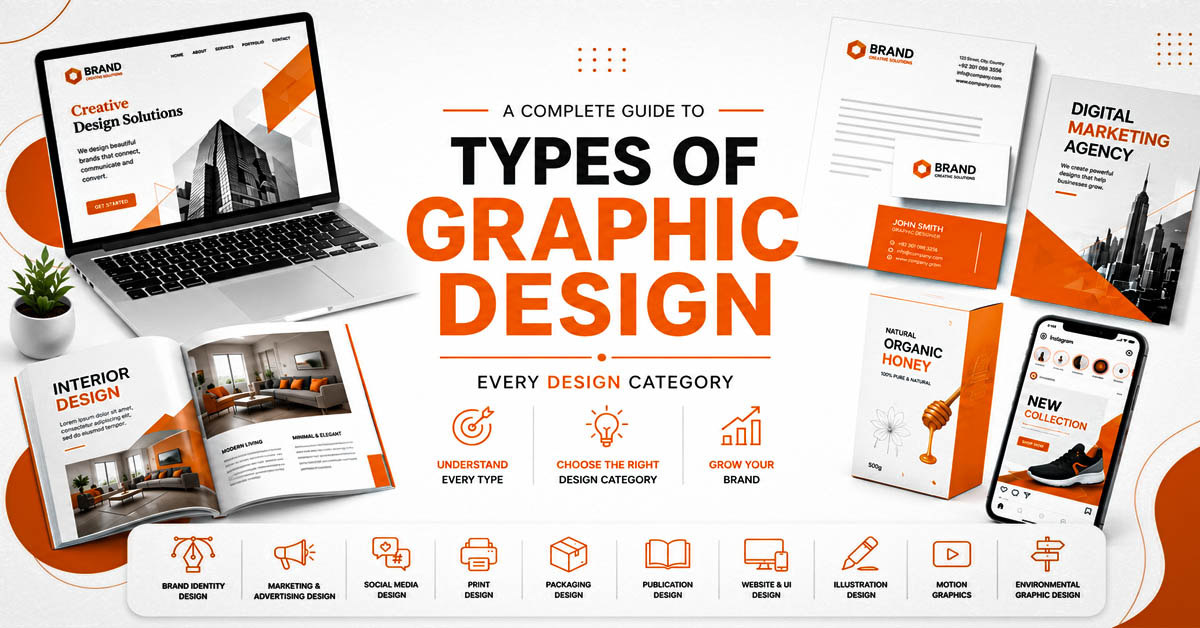
The types of graphic design influence how businesses communicate, promote products, build brand recognition, and connect with customers. Every design category serves a different purpose. A logo builds identity, packaging attracts buyers, social media graphics increase engagement, and website design improves user experience. Understanding these graphic design categories helps businesses choose the right creative solution instead of investing in designs that do not support their objectives.
This guide explains what graphic design is, how different design disciplines solve specific communication challenges, and where each category is used. You’ll discover the main types of graphic design, their business applications, and practical tips for choosing the right design services. Whether you’re building a new brand or improving an existing one, understanding these design specialties will help you make better marketing and branding decisions.
What Is Graphic Design?
Graphic design is the process of communicating ideas through visual elements such as typography, color, images, icons, and layouts. Every design has a purpose, whether to educate customers, promote a product, build brand recognition, or improve the user experience. Rather than decorating information, graphic design organizes content to make communication clear, engaging, and memorable.
Modern businesses rely on graphic design across websites, advertisements, brochures, company profiles, social media, packaging, presentations, and printed marketing materials. Strong visual communication helps customers understand information more quickly, improves credibility, and creates a consistent brand image.
The Purpose Of Graphic Design
The primary purpose of graphic design is to solve communication problems visually. Every design should guide viewers toward a specific action, such as purchasing a product, contacting a business, or remembering a brand. Effective design combines creativity with strategy to deliver information in a way that is easy to understand.
Many influential designers, including Paul Rand, Paula Scher, Milton Glaser, Massimo Vignelli, and Jessica Walsh, helped shape modern visual communication by demonstrating that successful design is both functional and memorable.
Why Graphic Design Matters For Modern Businesses
Professional graphic design helps businesses create a consistent identity across every customer touchpoint. Whether someone visits your website, receives a brochure, or views a social media advertisement, consistent branding strengthens recognition and builds trust.
Global companies such as Apple, Nike, Google, and Coca-Cola have invested heavily in visual identity because consistent design makes brands easier to recognize. Businesses of every size can apply the same principles to improve customer perception and marketing performance.
Graphic Design Explained
Graphic design explained simply means using visual communication to solve business and marketing challenges. Designers combine creativity with structure to communicate messages through typography, color, imagery, spacing, and composition. Every design element works together to improve readability, attract attention, and support a specific objective.
Professional designers use software such as Adobe Illustrator, Adobe Photoshop, Figma, and Canva to create digital and print-ready assets. Although technology continues to evolve, the goal remains the same: communicating ideas clearly through effective visual design.
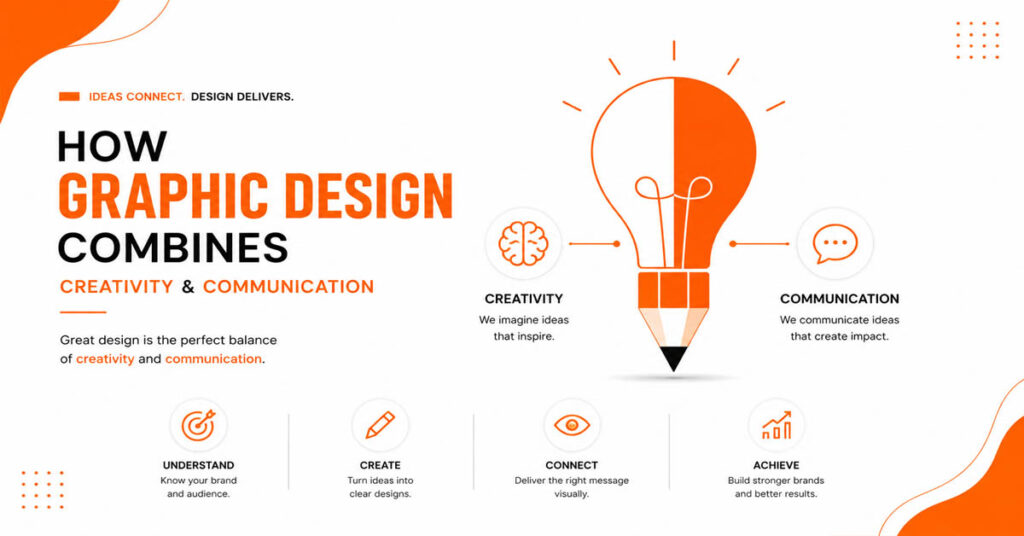
How Graphic Design Combines Creativity And Communication
Creativity generates ideas, while communication ensures those ideas achieve measurable results. A visually attractive design has limited value if customers cannot understand the message or identify the next step.
Successful designers consider audience behavior, branding, visual hierarchy, and usability before selecting colors, typography, imagery, or layouts. This balance transforms attractive graphics into effective business communication.
The Core Elements Of Graphic Design
Every graphic design project relies on five fundamental elements that create clear and engaging visual communication.
Typography
Typography determines how written information appears. Font selection, spacing, alignment, and hierarchy influence readability while supporting the personality of a brand.
Color
Color shapes customer perception and strengthens recognition. Applying color theory strategically helps businesses communicate emotion, establish identity, and maintain visual consistency.
Images And Graphics
Images, icons, and illustrations explain ideas quickly while making content more engaging and easier to understand.
Layout And Composition
A balanced layout organizes information logically, allowing readers to navigate content without confusion.
Visual Hierarchy
Visual hierarchy guides attention toward the most important information first by using size, spacing, contrast, and positioning effectively.
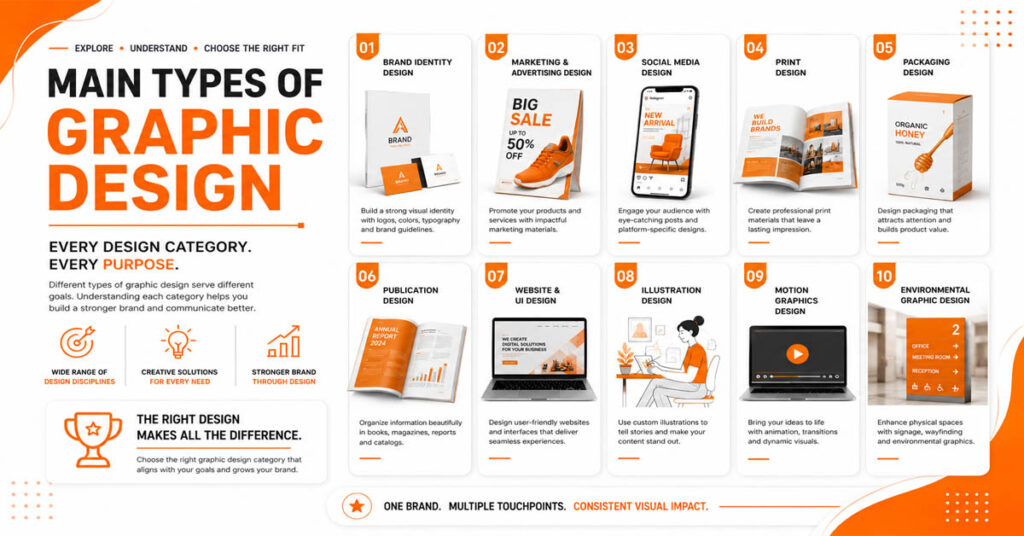
Main Types Of Graphic Design
There are many types of graphic design, and each focuses on a different area of visual communication. Some help businesses build a recognizable brand, while others promote products, improve digital experiences, or communicate information more effectively. Understanding these graphic design categories helps businesses choose design services that match their goals.
Brand Identity Design
Brand identity design creates the visual foundation of a business. It includes logo design, brand colors, typography, icons, and visual guidelines that ensure every marketing material reflects the same identity. A strong brand identity helps customers recognize and remember your business across every platform.
Agencies such as Pentagram, Landor Associates, and Frog Design have demonstrated how strategic brand identity can transform businesses into globally recognized brands through consistent visual communication.
Where Brand Identity Design Is Used
Brand identity design appears throughout a business, including:
- Logos
- Business cards
- Letterheads
- Company profiles
- Websites
- Social media graphics
- Packaging
- Marketing materials
Maintaining consistency across these assets improves professionalism and builds customer trust.
Marketing And Advertising Design
Marketing and advertising design promotes products, services, and campaigns through persuasive visuals. Unlike brand identity, which remains consistent over time, marketing graphics change to support new offers, seasonal promotions, and advertising objectives.
Designers create layouts that attract attention while encouraging customers to take action. Strong typography, compelling imagery, and clear calls to action improve campaign performance across both print and digital channels.
Common Marketing Design Materials
Marketing designers commonly create:
- Brochures
- Flyers
- Posters
- Billboards
- Digital advertisements
- Email graphics
- Promotional banners
- Exhibition displays
Every design should communicate a clear message while remaining consistent with the company’s overall branding.
Social Media Design
Social media design focuses on creating platform-specific graphics for Instagram, Facebook, LinkedIn, Pinterest, YouTube, and other digital platforms. Consistent branding across social media helps businesses increase recognition while maintaining a professional online presence.
Professional designers adapt layouts to each platform without changing the overall visual identity. This creates a cohesive brand experience regardless of where customers discover the business.
Designing Content For Different Platforms
Every platform requires different content formats and audience expectations. LinkedIn often favors professional business graphics, while Instagram and Pinterest emphasize visual storytelling. Adapting designs for each platform improves engagement without compromising brand consistency.
Print Design
Print design creates physical marketing and business materials used for communication, branding, and promotion. Although digital marketing continues to grow, printed materials remain valuable during meetings, exhibitions, conferences, and direct marketing campaigns.
Professional print design considers paper size, typography, image resolution, margins, bleed settings, and commercial printing requirements to ensure high-quality production.
Essential Print Design Materials
Print designers regularly produce:
- Business cards
- Letterheads
- Company profiles
- Brochures
- Flyers
- Catalogs
- Presentation folders
- Product inserts
Well-designed print materials strengthen brand identity while supporting sales, networking, and customer communication.
Packaging Design
Packaging design combines branding, product information, and functionality into one customer experience. Attractive packaging increases shelf visibility while helping customers understand product features before making a purchase.
Designers carefully select typography, colors, imagery, materials, and structural layouts to ensure packaging reflects the brand while protecting the product throughout storage and transportation.
Why Packaging Design Influences Buying Decisions
Customers often judge products before reading the label. Professional packaging communicates quality, creates trust, and helps products stand out in competitive retail environments, making it an important part of modern brand strategy.
Publication Design
Publication design focuses on organizing large amounts of content into structured, readable layouts. It combines typography, imagery, spacing, and grid systems to make books, magazines, reports, and catalogs easier to read while maintaining a professional appearance.
Printed And Digital Publications
Publication designers create:
- Books
- Magazines
- Annual reports
- Catalogs
- Newsletters
- E-books
- Corporate reports
A well-designed publication improves readability, guides readers through information logically, and reinforces brand identity from the first page to the last.
Website And User Interface (UI) Design
Website and User Interface (UI) Design focuses on creating websites, web applications, and digital products that are attractive, functional, and easy to use. Designers often work alongside User Experience (UX) Design specialists to improve navigation and simplify user interactions.
Modern tools such as Figma, Sketch, and InVision allow designers to create interactive layouts before development begins, helping businesses launch user-friendly digital experiences.
Creating Better User Experiences
A successful website guides visitors naturally from one section to another. Clear navigation, readable typography, responsive layouts, and logical page structures improve usability while encouraging visitors to complete actions such as making enquiries or purchasing products.
Illustration Design
Illustration design creates custom artwork for brands, publications, websites, packaging, advertising, and digital media. Unlike stock images, original illustrations give businesses a unique visual style that strengthens brand recognition and supports storytelling.
Custom Illustrations For Brands
Businesses use custom illustrations for infographics, product packaging, editorial content, websites, social media campaigns, and marketing materials. Original artwork helps brands communicate ideas more creatively while creating a distinctive visual identity.
Motion Graphics Design
Motion graphics combine graphic design with animation to create engaging visual content. Businesses use animated graphics for social media campaigns, explainer videos, presentations, digital advertising, and logo animations to increase audience engagement.
Bringing Visual Content To Life
Animated typography, icons, illustrations, and transitions make complex information easier to understand. Motion graphics are widely used in marketing, education, product demonstrations, and corporate communication because they capture attention quickly.
Environmental Graphic Design
Environmental graphic design combines branding, architecture, and interior spaces to improve navigation and create memorable customer experiences. It is commonly used in offices, shopping malls, hospitals, museums, airports, exhibitions, and retail environments.
Designing Physical Brand Experiences
Environmental designers create signage, office branding, exhibition displays, and wayfinding systems that help people move through physical spaces while reinforcing the company’s visual identity. These designs connect branding with real-world environments instead of digital platforms alone.
Which Type Of Graphic Design Does Your Business Need?
The right type of graphic design depends on your business objectives. Every design category solves a different communication challenge, so identifying your goals helps you invest in services that deliver measurable results.
Startups And Small Businesses
Startups need a strong foundation before expanding their marketing efforts. Brand identity design, logo design, business stationery, websites, and social media graphics establish credibility while creating a professional first impression.
Corporate Companies
Corporate businesses require consistent branding across reports, presentations, websites, proposals, advertisements, and internal communications. Maintaining one visual identity strengthens recognition and supports long-term brand growth.
Retail And E-Commerce Brands
Retail businesses benefit from packaging design, marketing graphics, product catalogs, website banners, and promotional campaigns. Consistent visual communication helps products attract attention while improving customer confidence.
Service-Based Businesses
Service providers rely on company profiles, brochures, presentations, websites, and business stationery to communicate expertise. Professional graphic design builds trust and presents services clearly before the first meeting.
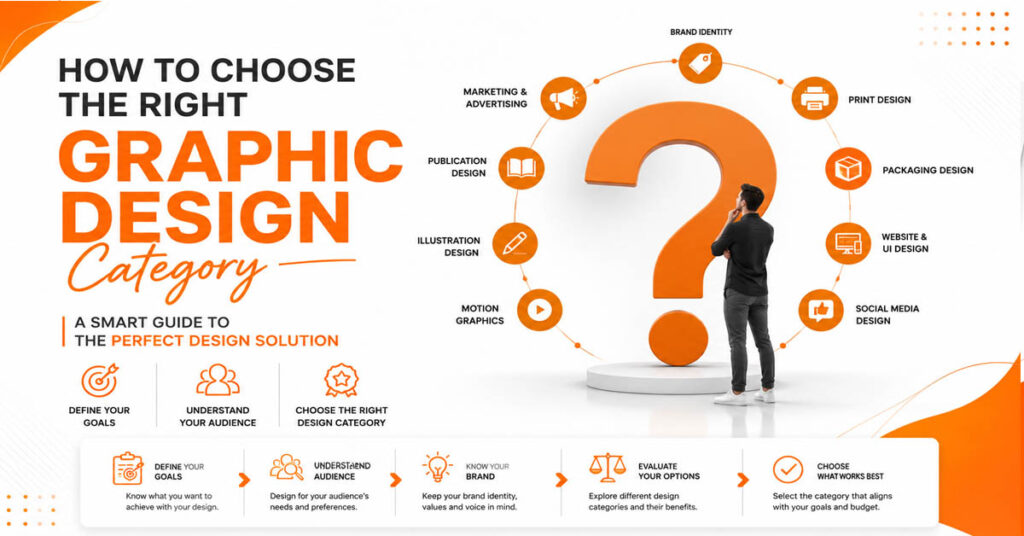
How To Choose The Right Graphic Design Category
Choosing the right graphic design category starts with understanding what you want to achieve. A clear objective makes it easier to select design services that support your business rather than following temporary design trends.
Define Your Business Goals
Identify whether your priority is branding, marketing, product promotion, packaging, or improving your website. Every objective requires a different design discipline, making goal-setting the first step in every successful project.
Understand Your Target Audience
Different audiences respond to different visual styles. Understanding customer preferences helps designers select appropriate typography, imagery, layouts, and colors that communicate effectively.
Maintain Brand Consistency
Every brochure, website, social media graphic, and advertisement should follow the same visual identity. Consistent branding improves recognition and makes your business appear more professional across every platform.
Work With Professional Graphic Designers
Professional designers understand branding, typography, color theory, composition, and visual hierarchy. Their experience helps businesses create designs that are visually appealing while achieving clear marketing and communication goals.
How AmmaarDesigns Helps Businesses With Graphic Design
At AmmaarDesigns, we create graphic design solutions that combine creativity with business strategy. Every project begins with understanding your brand, target audience, and communication goals before moving into the design process. This approach ensures every visual supports your marketing objectives while maintaining a consistent brand identity.
Brand Identity Design
We create professional brand identities that include logo design, color palettes, typography, and brand guidelines. Every element is designed to help businesses build recognition and present a consistent image across print and digital platforms.
Print Design Solutions
Our print design services include business cards, letterheads, brochures, flyers, company profiles, catalogs, and presentation folders. Every design is prepared for commercial printing with professional layouts and production-ready files.
Packaging Design Services
We design product packaging that balances functionality with visual appeal. Every package reflects your brand identity while helping products attract attention on retail shelves and online marketplaces.
Social Media Design
We create branded social media graphics for Instagram, Facebook, LinkedIn, Pinterest, and other platforms. Every design follows your visual identity while adapting to platform-specific sizes and content requirements.
Marketing Collateral Design
From brochures and promotional materials to exhibition graphics and advertising campaigns, we develop marketing collateral that communicates your message clearly while strengthening your brand across every customer touchpoint.
Consistent Branding Across Every Platform
Every design we create follows the same visual standards, ensuring your website, printed materials, packaging, presentations, and digital marketing work together as one unified brand. This consistency helps businesses improve recognition, build trust, and communicate professionally.
Frequently Asked Questions
What Are The Main Types Of Graphic Design?
The main types of graphic design include brand identity, marketing and advertising, social media, print, packaging, publication, website and UI, illustration, motion graphics, and environmental graphic design.
What Is Graphic Design?
Graphic design is the process of communicating ideas through typography, color, imagery, and layout to create clear and effective visual communication.
Which Type Of Graphic Design Is Best For Businesses?
Most businesses benefit from brand identity design, print design, marketing design, website design, and social media graphics. The right combination depends on your business goals and audience.
What Is The Difference Between Graphic Design And Branding?
Graphic design creates visual assets such as logos, brochures, websites, and advertisements. Branding defines the overall identity and perception of a business, while graphic design communicates that identity visually.
Why Is Graphic Design Important For Businesses?
Professional graphic design strengthens brand recognition, improves communication, builds customer trust, and helps businesses stand out in competitive markets.
Conclusion
Understanding the different types of graphic design helps businesses choose the right creative solutions for every stage of growth. From brand identity design and marketing design to packaging design, publication design, website design, and motion graphics, each category serves a specific purpose. Selecting the right design discipline improves communication, strengthens brand identity, and creates a better customer experience.
Whether you’re launching a startup, growing an established business, or promoting new products, professional graphic design is a valuable investment. A consistent visual identity across print and digital platforms improves recognition and helps customers connect with your brand more confidently.
At AmmaarDesigns, we provide creative graphic design solutions tailored to your business goals. From logo and brand identity design to print, packaging, social media, and marketing collateral, we help businesses communicate clearly, build trust, and create lasting impressions through thoughtful visual design.